Once you will be in Naxos, you can book a boat tour to visit Delos!
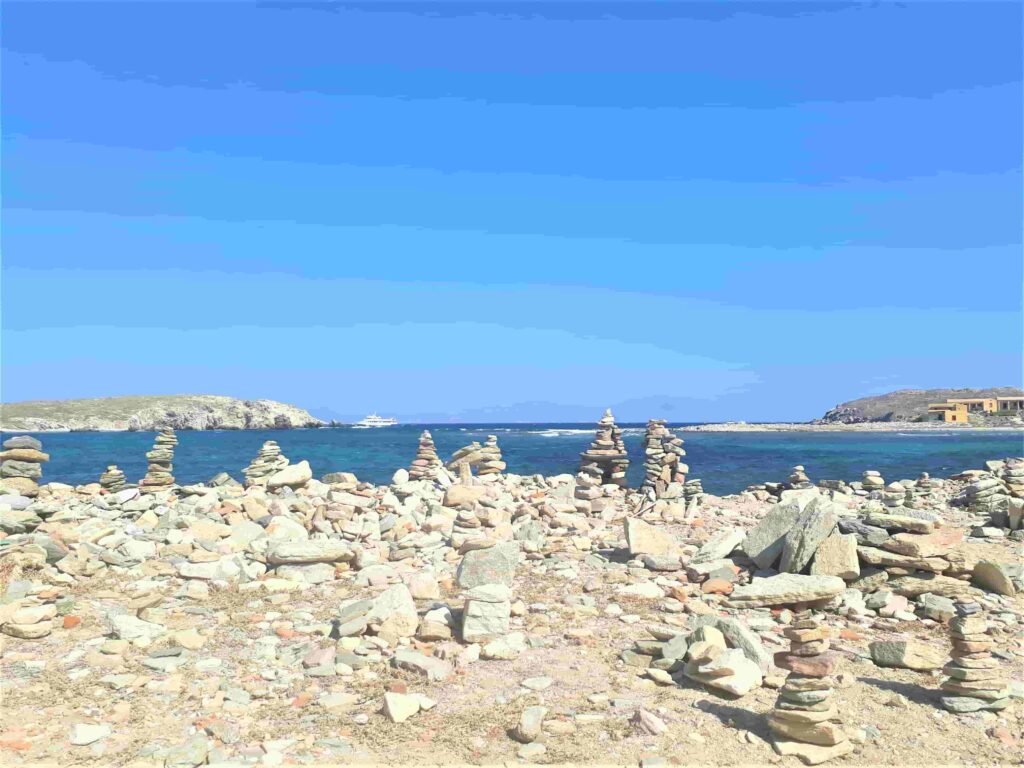
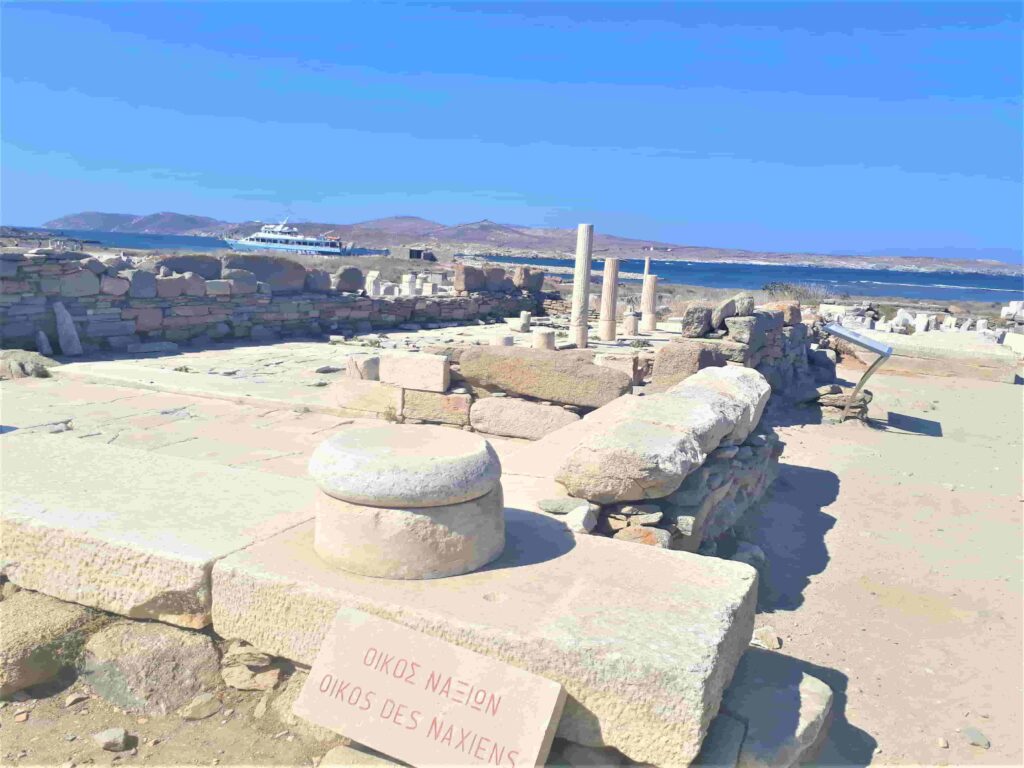
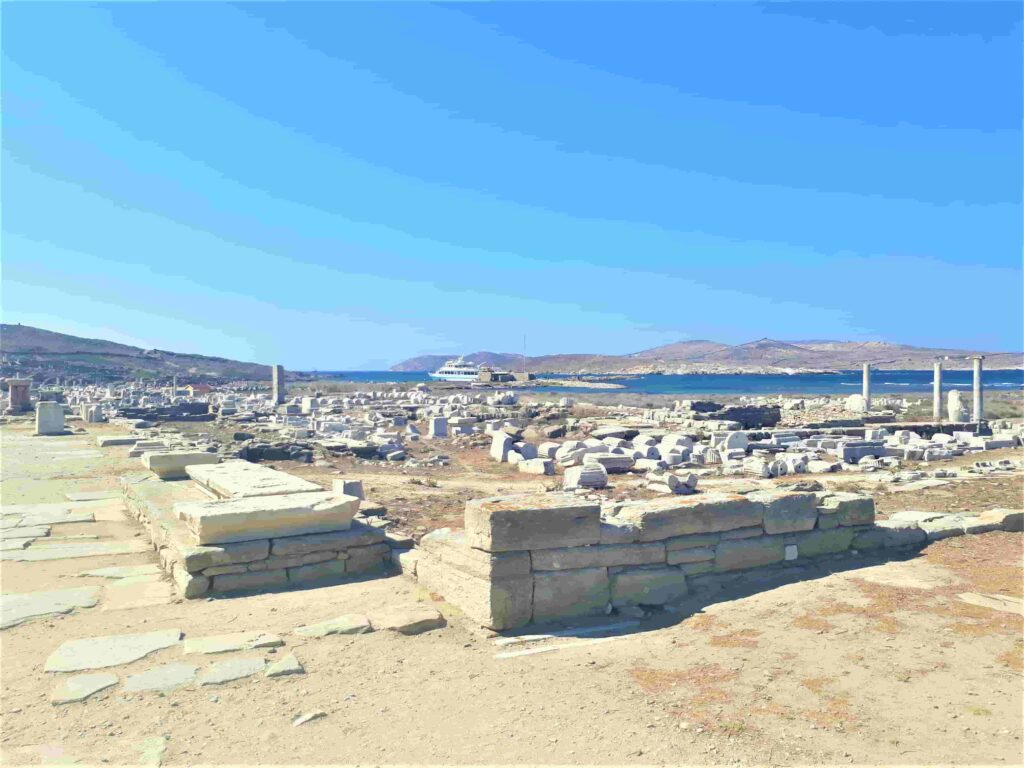
The sacred island of Delos is a small rocky strip of land a few miles off the western coast of Mykonos. Delos is one of the smallest islands in the Cyclades. A UNESCO World Heritage Site, the island of Delos, according to mythology, was the birthplace of Apollo and Artemis. Today, it is a vast archaeological site filled with important monuments that attract thousands of visitors each year. This priceless archaeological site, second in importance only to Delphi, covers almost the entire island: from the harbor, a majestic sacred road leads to the Sanctuary of Apollo, where there are temples and altars.
Delos was an important religious and commercial center, thanks to its strategic position at the center of maritime routes. After defending itself in the Persian Wars, it fell to the Athenians in 454. With the advent of Alexander the Great, it regained its independence and economic power. It was the hub of eastern Mediterranean trade and a cosmopolitan center. The Romans also recognized the island’s status as a free port, but in 88 AD Mithridates, king of Pontus, brutally attacked this Latin colony, and twenty years later pirates deported the few survivors as slaves. The island declined and was completely abandoned by the 7th century. Only in 1873, thanks to the French School of Archaeology, did Greece permit the opening of archaeological sites.
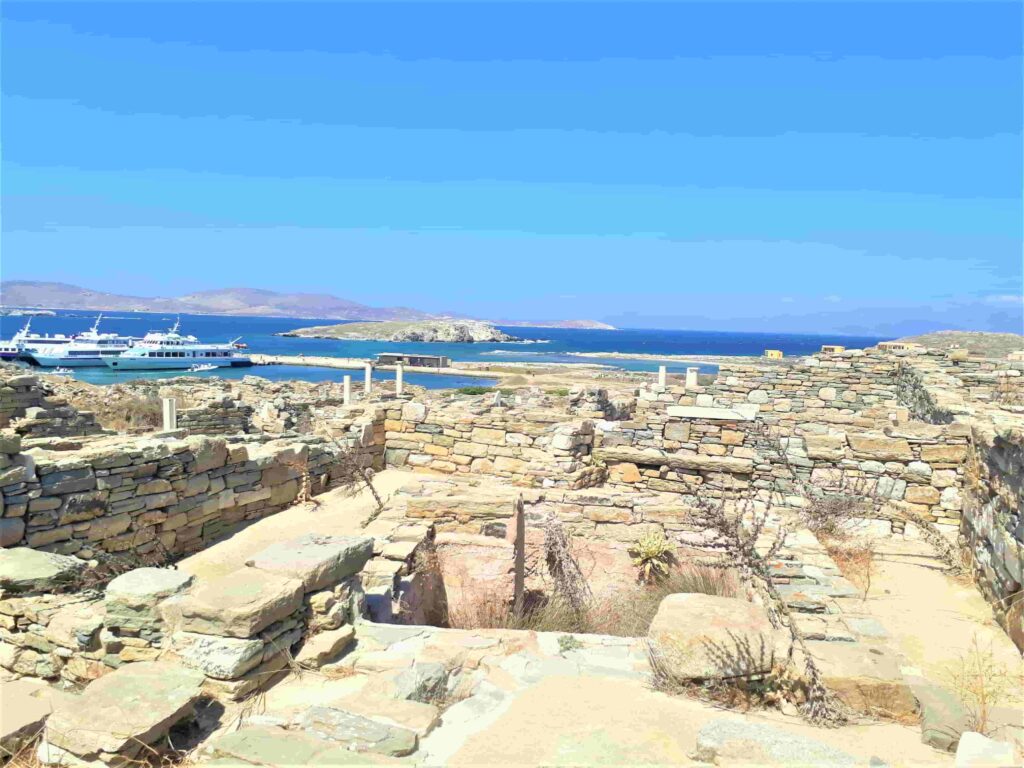
There are four main areas: the maritime quarter, the theater, the Sanctuary of Apollo at the center of the site north of the harbor and the Lion District. To the north there is the sacred lake, with the famous Terrace of the Lions and the Agora. Some of the houses still display magnificent mosaic floors. The monuments span a period from the Archaic period, through the Classical age, to the Hellenistic period.
From the sacred harbor, where ancient delegations sent to religious ceremonies docked, passing by the houses of Dionysus, Cleopatra, and the Trident, you reach the ancient theater. From here, the view is divine. Stunning mosaics can be admired in the House of the Masks and the House of the Dolphins. From here, you reach the summit of Mount Kynthos and admire the splendid landscape of the islands of Naxos and Syros to the north and Mykonos to the east. Descending, you pass the cave of Heracles and the terraces of the foreign deities Syrian and Egyptian. Even lower is the House of Hermes with its large impluvium.
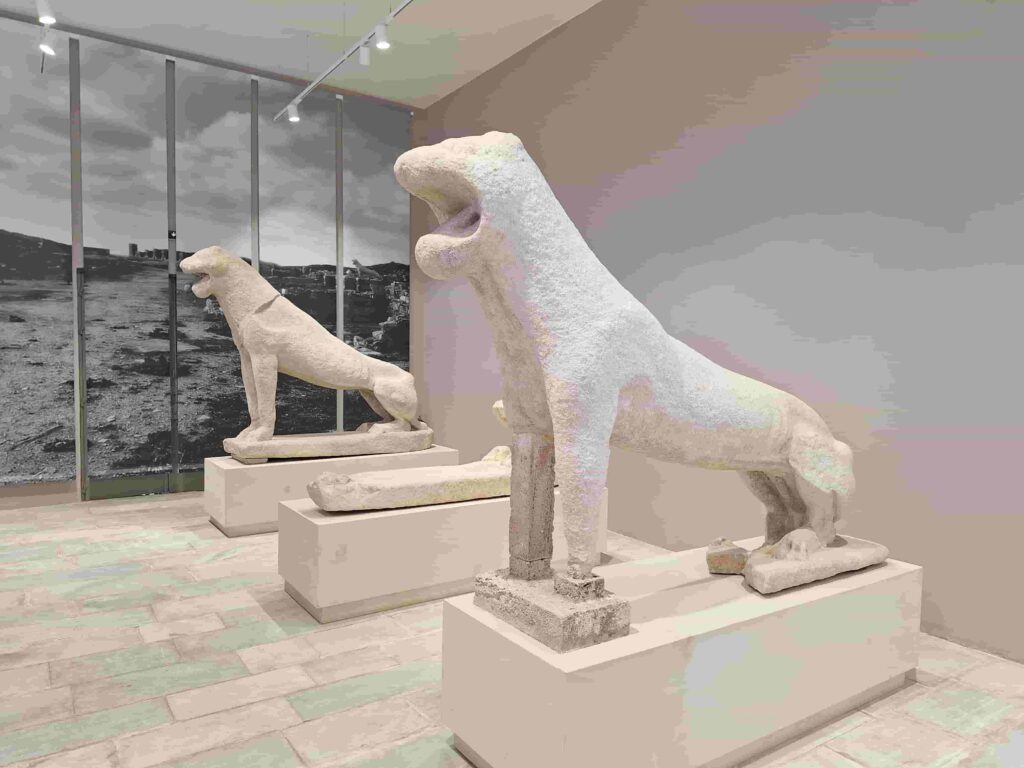
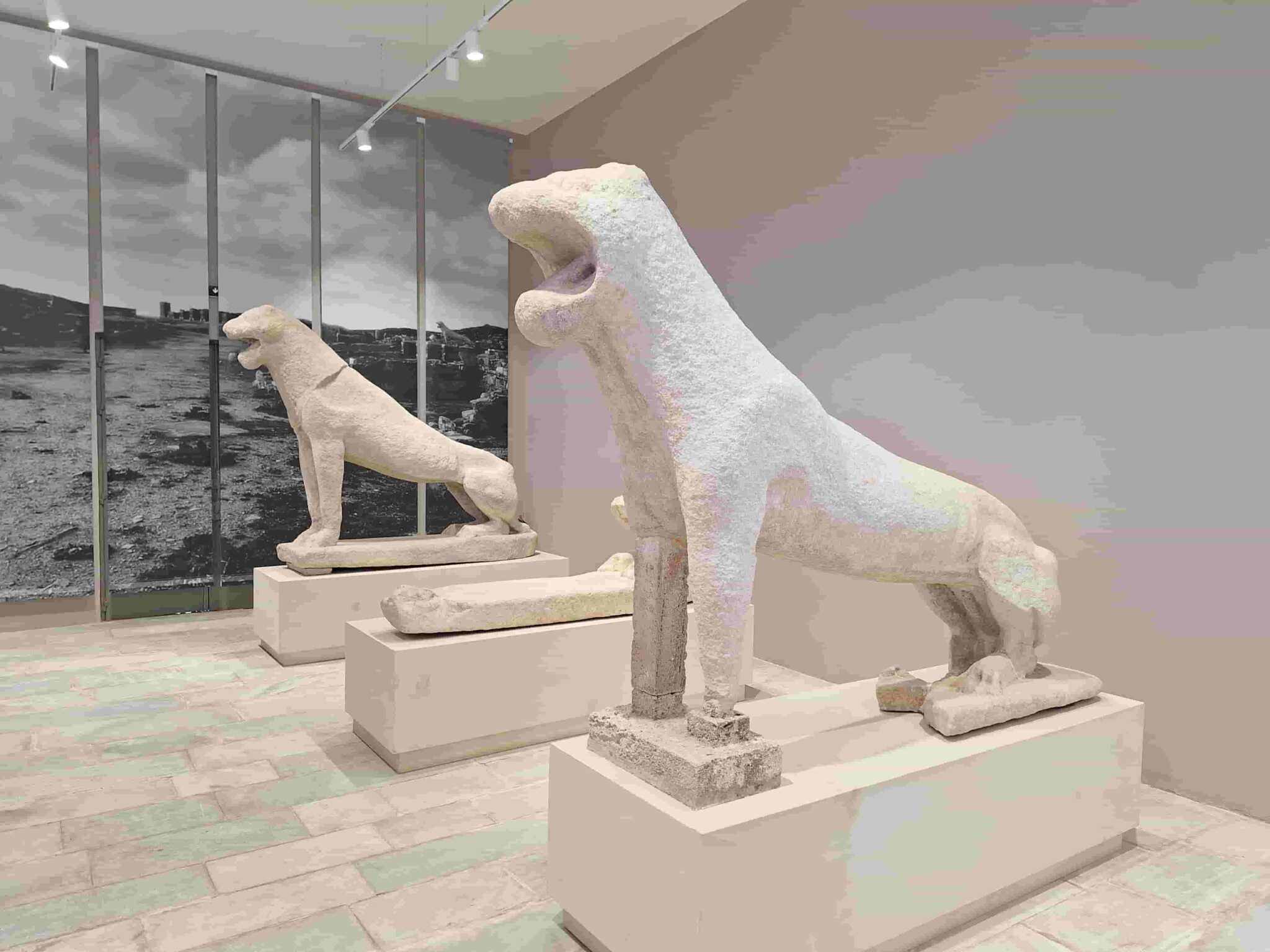
The main attraction of Delos is the Terrace of the Lions. The Street of the Lions, with its famous animals, is one of the island’s symbols. of which, however, only the bases remain, having been moved to the museum. The famous five marble lions on the island were the guardians of the sacred lake (now drained) and face east to watch the sunrise in homage to the god Apollo. Originally, there were 16 statues and they were donated to Delos in honor of the god Apollo and to serve as guardians of the island. The sixth statue can be admired in Venice, at the entrance to the Arsenal. In fact, in 1500, the Venetians plundered Delos, taking some of the island’s artifacts back home.
Museum: it houses some of the material excavated on the island, including a collection of vases and sculptures.
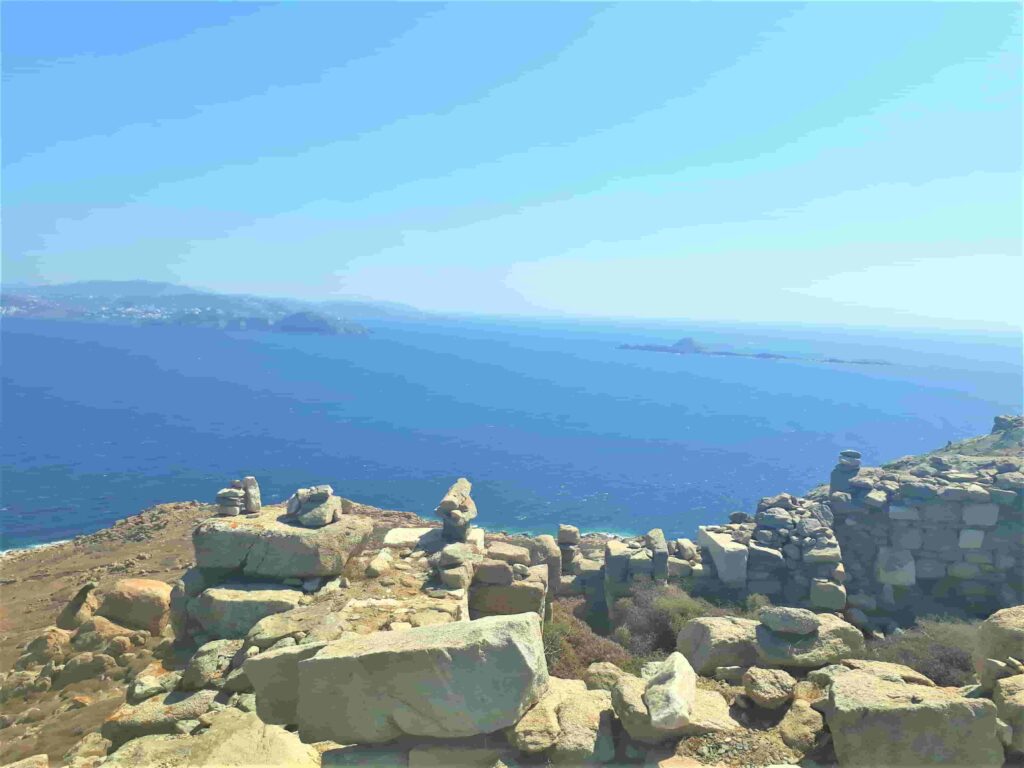
Climbing to the top of Mount Kynthos offers truly beautiful and evocative views, with a splendid panorama of the islands of Naxos and Syros to the north and Mykonos to the east.
The Sacred Lake: according to Greek mythology, Leto gave birth to the twins Apollo (God of the sun) and Artemis (goddess of the moon and the hunt) on the shores of this lake. Unfortunately, no trace of the mythological lake remains today. In 1925, following a malaria epidemic that struck archaeologists working on the excavations, it was drained.
The Altar or Temple of Zeus: you have to climb a hill to admire the Temple of Zeus. Of course, the climb and the heat make the journey a bit difficult, but once you reach the top, you’ll be rewarded with the beauty of the view.
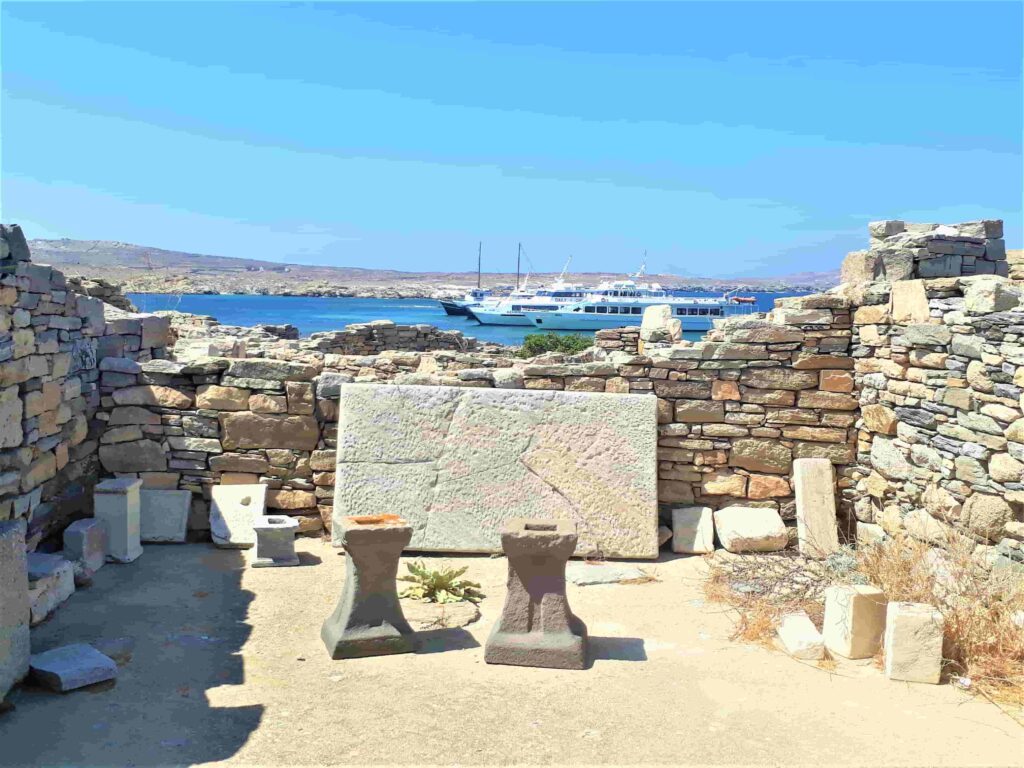
The houses and their mosaics: inside some houses, you can admire perfectly preserved mosaic floors dating back to the 2nd century BC.The masonry structures of the various dwellings are still present and well-maintained.
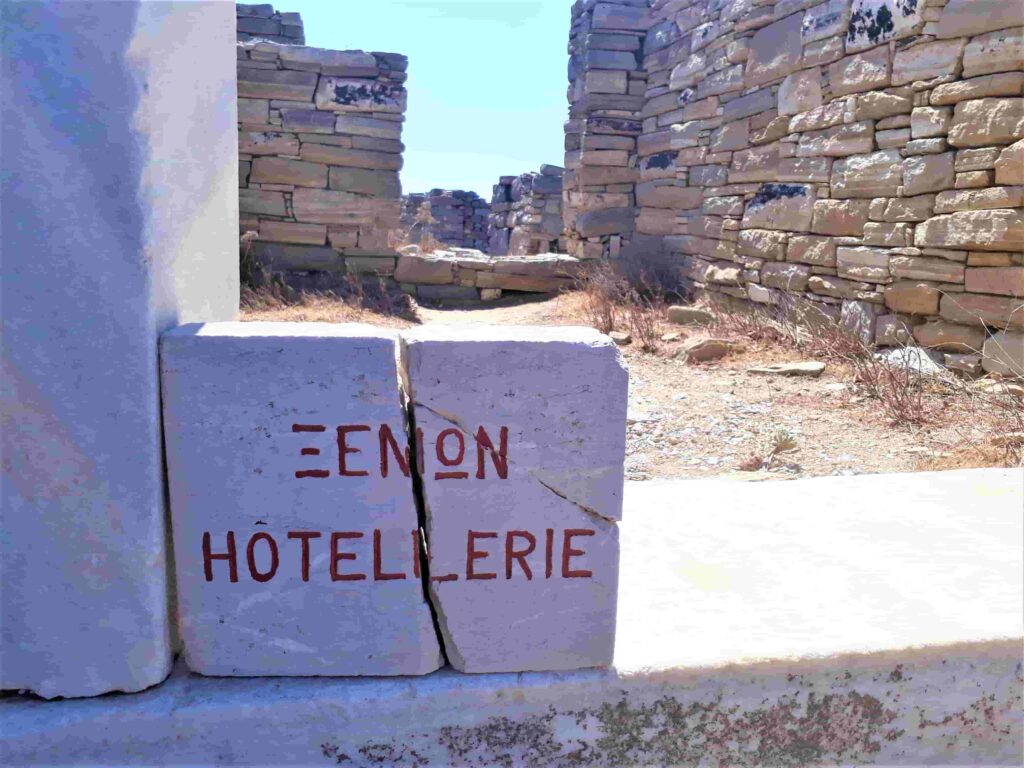
The theater of Delos was built in 300 BC and also featured an ancient cistern. Not to be missed in this area is the House of the Masks, an ancient inn for actors that houses a splendid mosaic of Dionysus.
So, our suggestion is to visit this incredible island and to fell all the amazing energy that comes from his past!
Please check also our article dedicated to Mykonos:
Mykonos – the most famous Greek island in the world | Naxos Intermediate